A publication to read.
Article templates, contributor profiles and editorial sections create a consistent reading experience.
See the editorial structure ↓Live platform · ongoing development
FLAGSHIP PLATFORM / PUBLISHING & PUBLIC INFORMATION
An editorial and public-information platform bringing reporting, searchable candidate records and voting-station information into one digital experience.
THE CHALLENGE
Connect a publication and public records without making every reader follow the same path.
THE RESPONSE
Shared identity, content-specific templates and distinct search and browse journeys.
THE EVIDENCE
A live publication, searchable public registers and a shared system for navigating both.
THE PLATFORM, AT A GLANCE
Article templates, contributor profiles and editorial sections create a consistent reading experience.
See the editorial structure ↓Search and geographic browse paths help readers find candidate and voting-station information.
See the information experience ↓Structured content, repeatable builds and documented release checks support the work behind the interface.
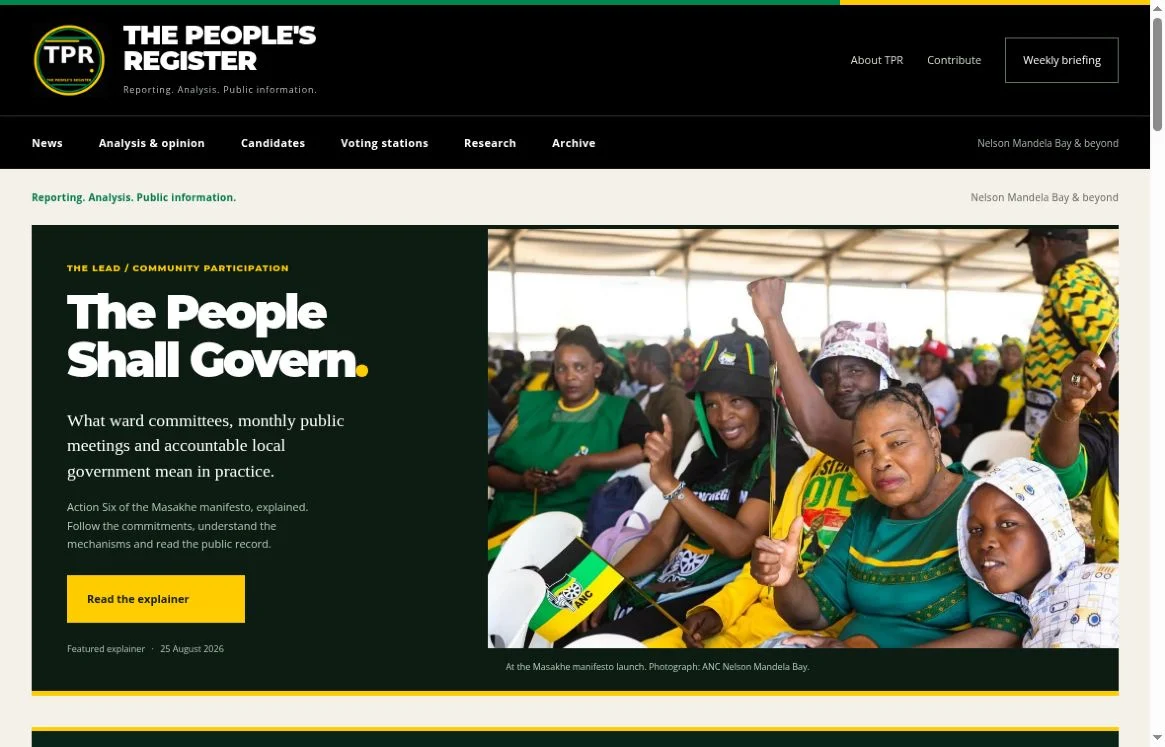
See the engineering ↓The People’s Register publishes reporting and analysis alongside structured public information. Readers can move between articles, contributors, candidate lists and voting-station records.
The navigation separates editorial sections from public registers, with a shared visual identity across both.
The interface brings these routes together without treating every visitor as if they arrive for the same reason.
Visit the current website to experience the publication and its public-information tools.
Visit The People’s RegisterExternal website. Content and features may change as the publication develops.
A reader arriving for a news story needs a different route from someone looking for a ward or candidate. The platform makes those journeys explicit: editorial sections sit alongside named public-information destinations in the main navigation.
The homepage uses a publication-style hierarchy: a lead story, recent reporting, public registers, analysis and longer reads. Headlines, dates and contributor identities help distinguish a report from an opinion or a reference page. The system carries an editorial identity without requiring every content type to share the same layout.
Articles, contributor pages and public records use layouts suited to their content.
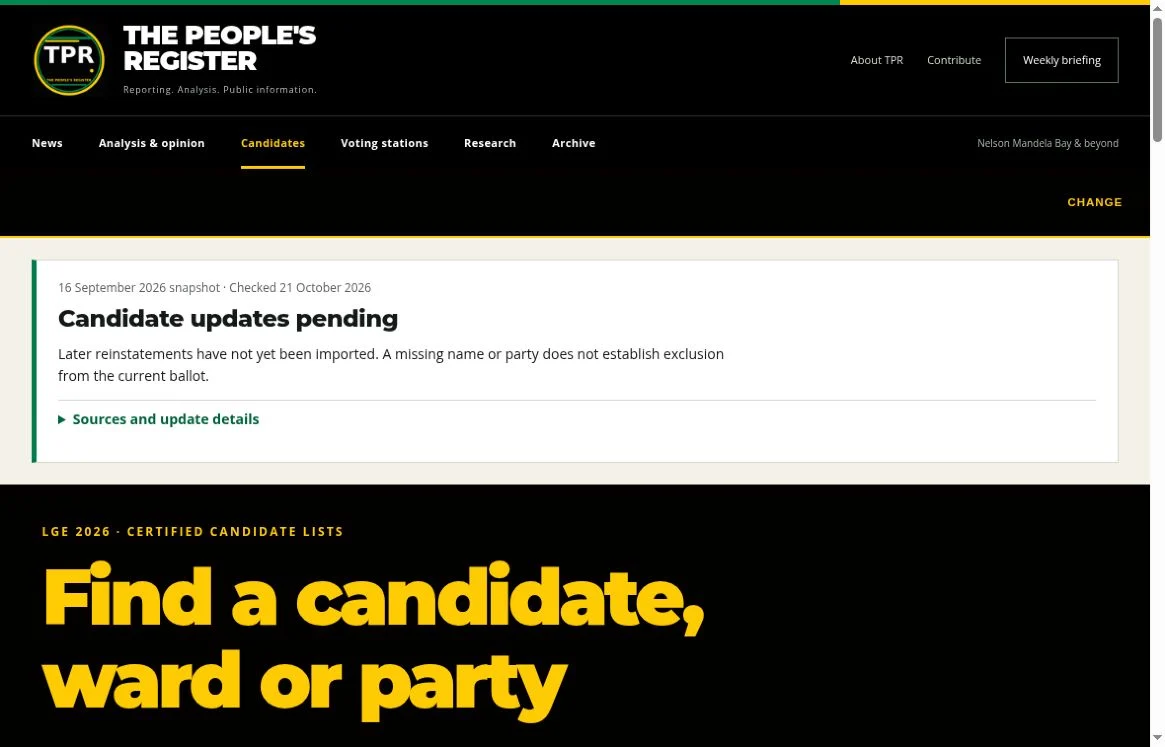
The Candidate Register offers separate routes by ward, name and party. Province, municipality and ward controls organise the geographic journey rather than requiring a visitor to read the full dataset. Related pages provide voting-station information and links into local records.
The interface also displays source dates, update notices and documented limitations. That context matters: an attractive search result should not imply that a dated record is current. The publication distinguishes the imported record from the editorial work around it.
On the wider site, contributor profiles, editorial standards, corrections and source information form part of the navigation. Readers can use these pages to check the publication’s sources and policies.
Publication templates sit alongside search and browse interfaces for public records. Shared navigation connects the two parts of the website.
The live publication continues to develop. This case study documents its information architecture and visible digital experience in October 2026.
The platform uses JavaScript and Node.js tooling to assemble a shared publication experience from structured content and source snapshots. Python supports source extraction and reconciliation where information begins in documents rather than a ready-to-use dataset.
The build includes route inventories, regression tests, crawl-path audits and indexability checks. Source dates and known limitations remain part of the published record rather than disappearing behind the interface.
The release process separates review from production, identifies the exact source being released and retains a previous deployment as a rollback target. These are implemented controls in this platform’s source workflow, not a claim of an external certification.
Explore the engineering foundationsIf your organisation publishes frequently, holds useful information or serves audiences with different needs, the same questions apply: what should people find first, how should the content connect and what will keep it maintainable?
The scope will differ. A discovery engagement can establish which parts of your current platform need to change before you commit to a build.
Explore strategy & discoveryEvery project begins with an agreed scope. Deliverables, review stages, responsibilities, fees and timing are confirmed in a proposal. Hosting, third-party services and ongoing care are agreed separately.